
Higher Education’s Economic Impact on Oklahoma
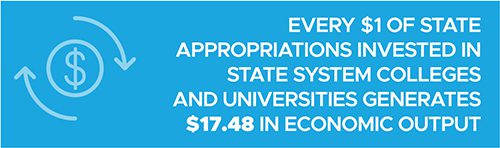
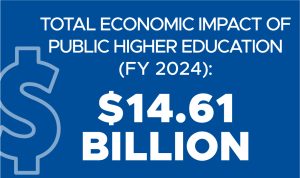 Commissioned by the Oklahoma State Regents for Higher Education in partnership with the University of Cincinnati Economics Center, this report highlights the vital role public colleges and universities play in strengthening Oklahoma’s economy.
From job creation to workforce development, the analysis quantifies how higher education drives growth, supports communities, and delivers a strong return on public investment.
 Key Highlights (PDF, 145k)
Full Report (PDF, 2m)

OKHigherEdConnect.org
Oklahoma's higher education system is committed to growing Oklahoma businesses as well as recruiting companies to the state. To facilitate the connection between businesses and higher education institutions, the State Regents launched OKHigherEdConnect.org , an online searchable database of business resources available at Oklahoma's colleges and universities. This database is a handy informational tool that is both simple to use and thorough, with services ranging from tools to help people start a business or expand their customer base to customized corporate training programs. Customers can search for a particular service by type of service, by city and proximity to a city, and by institution and region of the state. Ideally, search results will direct them to the colleges or universities with the business resources that fit their need.
Individuals wanting to start a business, businesses needing a particular service, and economic developers searching for the perfect location are the targeted customers for the database. After selecting all the desired criteria and running the search, the results are shown on the screen and are available in two additional formats – a grid and exportable Excel spreadsheet. The database is provided by the State Regents as a mechanism to locate the available business support services at the various colleges and universities in the Oklahoma State System of Higher Education.

UpskillOK: Micro-Credential Programs
Upskill your workforce with micro-credential training and college credit courses through UpskillOK.org , Oklahoma higher education’s rapid micro-credential training program. If you’re looking to provide professional leadership and skills training for your workforce, Oklahoma’s public colleges and universities are ready to partner with you to create tailored courses and training programs for job-specific skills. Courses and credentials are aligned with Oklahoma's critical occupations. Upskill your workforce today!
 State Regents Workforce Ready Scholarship
 State Regents Workforce Ready Scholarship
The State Regents Workforce Scholarship, established by the Oklahoma State Regents for Higher Education, provides financial support to Oklahoma residents pursuing degrees in high-demand and emerging workforce fields. The program is designed to reduce financial barriers while strengthening the state’s workforce pipeline.
This scholarship offers a one-time award to help cover the cost of tuition, fees, and required course materials. To be eligible, students must enroll full-time, maintain a minimum 2.0 GPA, complete a work-based learning experience, and demonstrate that their academic program aligns with in-demand careers.
As part of the application process, students submit a career pathway portfolio, which is evaluated through a blind review process. Selected recipients are recognized at a regularly scheduled State Regents' meeting.
For detailed eligibility requirements, award amounts and application guidelines, visit www.okcollegestart.org .